In 2026, precision industries are raising the specification bar on every component in the fluid pathway. Semiconductor fabs, pharmaceutical manufacturers, biotechnology facilities, food processing plants, and high-purity water system operators are no longer selecting stainless steel pipe connectors based on corrosion resistance and pressure rating alone. They are specifying internal surface finish, passivation quality, electropolishing, cleanroom packaging, and material traceability documentation—because in high-purity systems, the fitting is not just a mechanical joint. It is a potential contamination point.
For procurement engineers and project managers sourcing from a stainless steel pipe coupling factory, this shift creates a more complex but more defensible specification process. A connector that passes a pressure test but retains particles, harbors microbial growth, or fails a surface roughness audit can trigger batch rejection, process shutdown, or regulatory nonconformity—costs that dwarf the price difference between a standard fitting and a properly specified high-purity pipe connector. TC Pipe Fittings offers stainless steel pipe coupling and pipe socket products designed for corrosion resistance, high pressure, extreme temperatures, and demanding industrial conditions. For high-purity applications, the sections below explain what additional specifications matter, why they matter, and how to build a procurement package that is both technically sound and audit-ready.
Why Standard Corrosion Resistance Is No Longer Enough for 2026 High-Purity Systems
The traditional stainless steel fitting specification—material grade, pressure class, connection type—was designed for systems where the primary concern is mechanical integrity and corrosion resistance. That specification is still necessary, but it is no longer sufficient for the growing range of industries where fluid purity is a process-critical parameter.
The 2026 buyer pain points in high-purity fluid systems are specific:
Semiconductor process gas delivery requires ultra-low particle generation at every connection point. A fitting with a rough internal surface, machining burrs, or inadequate cleaning can introduce particles into gas streams that damage wafer surfaces and reduce yield. Semiconductor-grade stainless components commonly specify controlled alloy composition, polished or electropolished internal surfaces, contamination-controlled packaging, and full material traceability.
Pharmaceutical WFI and purified water loops are subject to regulatory validation requirements that include surface roughness limits, passivation verification, and cleaning validation protocols. A fitting that cannot be reliably cleaned to the required microbial and endotoxin standard is a validation liability—regardless of its mechanical performance.
Biotech and clean steam systems require fittings that support sanitary flow geometry, minimize dead legs, and resist microbial colonization on internal surfaces. Surface roughness directly affects the ability of cleaning agents to reach and remove biofilm precursors.
Food, beverage, and brewery systems face increasing audit scrutiny on internal surface condition, with buyers required to demonstrate that fittings in product-contact service meet hygienic design standards and can be cleaned in place without residue accumulation.
In high-purity tubing and fitting systems, smooth polished surfaces are widely used to reduce particle adhesion and improve cleanability. Semiconductor-grade stainless systems often specify very low surface roughness values, with electropolishing or precision mechanical polishing as the standard surface treatment. The internal wall condition of a stainless steel pipe connector is therefore not a secondary specification—it is the primary determinant of whether the fitting is suitable for the application.
How Internal Surface Treatment Improves Cleanability: Electropolishing, Passivation, and Ra Control
Understanding the surface treatment options available for sanitary stainless steel fittings allows procurement teams to specify correctly and evaluate supplier capability accurately.
Surface roughness (Ra value) is the primary metric for internal surface quality in high-purity fittings. Ra measures the average deviation of the surface profile from the mean line, expressed in micrometers (μm) or microinches (μin). Lower Ra values indicate smoother surfaces with fewer micro-crevices where particles, residues, and microorganisms can accumulate. General industrial stainless fittings may have Ra values of 1.6 μm or higher. Sanitary and pharmaceutical applications typically require Ra ≤ 0.8 μm; high-purity and semiconductor applications may specify Ra ≤ 0.4 μm or lower.
Mechanical polishing uses abrasive media to reduce surface roughness progressively. It is the standard surface treatment for sanitary fittings in food, beverage, and pharmaceutical applications. Mechanical polishing can achieve Ra values suitable for most sanitary and pharmaceutical requirements, but it leaves a directional surface texture that may retain some micro-asperities.
Electropolishing (EP) is an electrochemical process that removes a thin, controlled layer from the stainless steel surface. This process smooths microscopic surface peaks more uniformly than mechanical polishing, improves the passive chromium oxide film on the stainless steel surface, and produces a surface that is both smoother and more corrosion-resistant than mechanically polished equivalents. For electropolished pipe sockets used in semiconductor process gas systems and pharmaceutical WFI loops, EP is the standard surface treatment because it simultaneously improves surface smoothness, passive film quality, and cleanability.
Passivation is a chemical treatment—typically using nitric acid or citric acid solutions—applied after fabrication to remove free iron from the stainless steel surface and strengthen the passive chromium oxide layer. Passivation is a baseline requirement for pharmaceutical grade connectors and is increasingly specified for food, biotech, and high-purity water applications. It should be documented with a passivation report as part of the fitting's material package.
Cleaning and packaging complete the surface quality chain. A fitting that is electropolished and passivated but then packaged without contamination controls can be re-contaminated before installation. High-purity applications require fittings to be cleaned, dried, capped, and packaged in sealed bags or cleanroom-compatible packaging to maintain internal surface condition through delivery and storage.
Key Specifications for Sourcing from a Stainless Steel Pipe Coupling Factory
A complete specification package for high-purity pipe connectors goes well beyond size and quantity. The following checklist gives procurement teams a consistent framework for evaluating supplier capability and comparing quotes on a technically equivalent basis.
Material Grade
SS304: general corrosion resistance, suitable for many industrial and food-adjacent applications
SS316: improved corrosion resistance, suitable for chloride environments and general pharmaceutical service
SS316L: low carbon content reduces sensitization risk during welding; preferred for pharmaceutical, biotech, and high-purity water applications where weld-adjacent corrosion is a concern
Connection Type
Threaded coupling: standard for general industrial and utility service
Socket-weld coupling: for higher-pressure applications requiring a permanent welded joint
Sanitary/hygienic coupling: for food, beverage, pharmaceutical, and biotech applications requiring cleanable, crevice-minimized geometry
Internal Surface Finish
Standard mill finish: general industrial service
Mechanical polish (Ra ≤ 0.8 μm): sanitary and pharmaceutical service
Electropolished (Ra ≤ 0.4 μm or lower): high-purity, semiconductor, and critical pharmaceutical applications
Passivation and Cleaning
Chemical passivation: confirm acid type, process standard, and documentation
Cleaning level: industrial clean, sanitary clean, or high-purity clean—specify based on the process medium and regulatory requirement
Packaging: end caps, double-bag sealing, or cleanroom packaging as required
Documentation Package
Material test certificate (MTC) with heat number traceability
Dimensional inspection report
Surface roughness measurement report (Ra value, measurement method)
Passivation and EP process report
Packaging and cleanliness statement
Pressure and Temperature
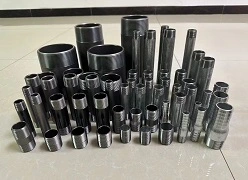
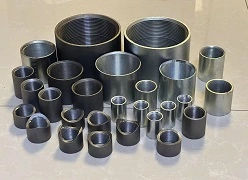
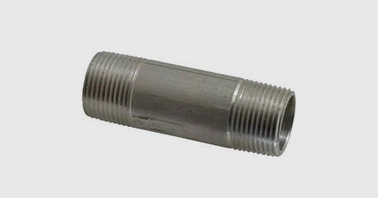
TC Pipe Fittings offers stainless steel pipe coupling and pipe socket products for plumbing, industrial, gas line, and demanding service applications, with stainless steel options available alongside galvanized, carbon steel, and black pipe coupling variants across the product range.
Application Scenarios: Where Electropolished Pipe Sockets and Sanitary Connectors Are Non-Negotiable
Semiconductor Process Gas Systems Ultra-high-purity gas delivery systems for semiconductor manufacturing require the lowest achievable particle generation at every connection point. Electropolished internal surfaces, contamination-controlled packaging, and full material traceability are standard requirements. A single non-conforming fitting in a process gas line can contaminate an entire tool and trigger costly maintenance and yield loss events.
Pharmaceutical WFI and Purified Water Loops Water for injection and purified water systems are subject to pharmacopeial standards and regulatory validation requirements. Internal surface roughness limits, passivation verification, and cleaning validation are all part of the qualification package. Electropolished pipe sockets with Ra ≤ 0.4 μm and documented passivation are the standard specification for new WFI loop construction and validated system upgrades.
Biotech Bioreactors and Sterile Transfer Lines Bioreactor feed lines, sterile transfer pathways, and clean steam distribution systems require fittings that support sanitary flow geometry and resist microbial colonization. Low-Ra internal surfaces reduce the surface area available for biofilm formation and improve the effectiveness of clean-in-place (CIP) and steam-in-place (SIP) cycles.
Food, Beverage, and Brewery Processing Product-contact fittings in food and beverage systems must meet hygienic design standards and support effective cleaning without residue accumulation. Sanitary stainless steel fittings with mechanically polished internal surfaces and documented material grades are the baseline requirement for most food safety audit frameworks.
Chemical and Industrial High-Purity Transfer Chemical processing, high-purity solvent handling, and precision industrial fluid systems require stainless steel connectors that combine corrosion resistance with clean internal geometry. SS316L is the preferred grade for chloride-containing or aggressive chemical media.
Installation, Selection, Maintenance, and TCO: The Audit-Ready Procurement Approach
Selection Workflow
Step 1 — Define the process medium and purity requirement. WFI, purified water, clean steam, process gas, food liquid, chemical, or general industrial fluid. The medium determines the minimum material grade, surface finish, and documentation requirements.
Step 2 — Select the stainless steel grade. SS304 for general corrosion resistance; SS316 for chloride environments and general pharmaceutical service; SS316L for welded pharmaceutical, biotech, and high-purity water applications where sensitization risk must be minimized.
Step 3 — Specify the internal surface finish. Match the Ra requirement to the application: standard mill finish for general industrial service; mechanical polish (Ra ≤ 0.8 μm) for sanitary and pharmaceutical service; electropolished (Ra ≤ 0.4 μm) for high-purity, semiconductor, and critical pharmaceutical applications.
Step 4 — Confirm passivation and cleaning requirements. Specify the passivation standard, acid type, and required documentation. Define the cleaning level and packaging requirement based on the installation environment and regulatory framework.
Step 5 — Request the full documentation package. MTC with heat number traceability, dimensional inspection, surface roughness report, passivation and EP process report, and packaging statement. For regulated industries, this documentation is not optional—it is part of the qualification record.
Step 6 — Plan maintenance and inspection intervals. Define the criteria for surface condition inspection, corrosion assessment, and fitting replacement. In validated systems, any fitting replacement may trigger a change control process—factor this into the lifecycle cost model.
Maintenance and TCO Advantages
Lower contamination risk from smooth, passivated internal surfaces reduces the probability of particle-related yield loss in semiconductor systems and microbial contamination events in pharmaceutical and food systems. The cost of a single contamination event—batch rejection, system shutdown, regulatory investigation—typically exceeds the cost of an entire project's fitting specification upgrade.
Fewer cleaning failures in CIP and SIP cycles reduce the frequency of repeat cleaning, saving time, cleaning agent cost, and utility consumption. Smooth internal surfaces are more reliably cleaned to validated standards than rough or mechanically damaged surfaces.
Longer service life in corrosive environments from correctly specified SS316L with passivation reduces replacement frequency and the associated labor, downtime, and change control cost.
Fewer audit nonconformities from complete documentation packages reduce the risk of regulatory findings, supplier qualification failures, and project delays. In pharmaceutical and semiconductor procurement, documentation gaps are treated as quality failures regardless of the physical product condition.
Lower total system risk from consistent, traceable, properly specified fittings reduces the probability of the high-cost events—contamination, shutdown, batch rejection, failed validation—that dominate the TCO calculation in high-purity systems.
Conclusion
In 2026, stainless steel pipe connectors for high-purity fluid systems must be specified beyond corrosion resistance and pressure rating. Internal surface finish, electropolishing, passivation, cleaning level, packaging, and material traceability documentation are the specifications that determine whether a fitting is suitable for semiconductor, pharmaceutical, biotech, food processing, or high-purity water applications. Getting these specifications right reduces contamination risk, cleaning failures, audit nonconformities, and the high-cost system events that make under-specified fittings far more expensive than their unit price suggests.
If you are sourcing from a stainless steel pipe coupling factory for high-purity, sanitary, or industrial applications, visit the TC Pipe Fittings Stainless Steel Pipe Coupling and Pipe Socket product page and submit your requirements for a tailored recommendation and quotation.
Please include the following details for an accurate recommendation:
Work condition: Medium (WFI/purified water/clean steam/process gas/chemical/food liquid/industrial fluid), operating pressure, temperature, cleanroom or sanitary requirement, corrosion risk
Quantity: Trial order, project quantity, or annual demand
Size/spec: Pipe size, wall thickness, material grade (SS304/316/316L), connection type, required Ra value, EP and passivation requirement, packaging level
Target metrics: Surface cleanliness level, Ra value target, leak-free performance, corrosion resistance, audit documentation requirements
Current problems: Particle accumulation, microbial risk, cleaning validation failure, corrosion, leakage, audit nonconformity, inconsistent surface finish across supply batches
FAQ
1. What are stainless steel pipe connectors?
Fittings—such as couplings and sockets—used to join stainless steel pipe sections securely while providing corrosion resistance, mechanical strength, and, where specified, clean internal surfaces suitable for high-purity, sanitary, or pharmaceutical fluid systems.
2. Stainless steel pipe connectors vs. carbon steel connectors: which is better?
Carbon steel connectors are cost-effective for general industrial systems where corrosion resistance and hygiene are not critical. Stainless steel connectors are required when the application involves corrosive media, hygienic design standards, high-purity fluid handling, or regulatory validation—where carbon steel's corrosion and contamination risk is unacceptable.
3. What is the ROI of electropolished or high-purity pipe sockets?
ROI comes from lower contamination risk, fewer cleaning failures, reduced shutdown frequency, longer service life in corrosive environments, and fewer audit nonconformities. In semiconductor, pharmaceutical, and biotech systems, the cost of a single contamination event or failed validation typically exceeds the total cost of upgrading the fitting specification for an entire project.
4. Do we need to redesign the pipeline to use high-purity stainless steel connectors?
Not necessarily for basic replacement. However, high-purity system upgrades may require a design review covering dead leg geometry, surface finish consistency across all fittings, sealing method compatibility, cleanability, and documentation alignment with the applicable regulatory or validation framework.
5. What parameters are needed for an accurate selection and quotation?
Process medium, operating pressure and temperature, pipe size and wall thickness, material grade (SS304/316/316L), connection type, required Ra value, electropolishing and passivation requirements, cleaning and packaging level, order quantity, and required documentation such as material certificates, surface finish reports, and passivation records.