In 2026, infrastructure contractors face a converging set of pressures: tighter project schedules, shrinking pools of certified welding labor, stricter hot-work permit requirements, and growing demand for faster maintenance turnaround on operating systems. Traditional field welding remains a reliable joining method in the right conditions—but it is also one of the most time-consuming, labor-intensive, and safety-sensitive operations on any jobsite. OSHA classifies welding, burning, and other spark-producing work as hot work, requiring permits, fire-watch procedures, and dedicated safety controls that add cost and complexity to every connection made.
That is why procurement teams, project engineers, and maintenance managers are accelerating the shift toward pipe coupling and socket-style mechanical joining systems. A properly selected fast-install pipe coupling or industrial pipe socket can reduce or eliminate hot-work exposure on eligible connections, cut installation time, lower dependence on certified welding labor, and simplify future maintenance—all of which translate directly into lower total installed cost. TC Pipe Fittings, as an experienced pipe socket factory, offers pipe coupling and pipe socket products across multiple materials, connection types, and pressure classes for water, gas, HVAC, industrial process, and infrastructure applications. The sections below cover the working principles, specification checklist, application fit, and TCO logic behind this shift.
Why Pipe Coupling Systems Are Replacing Weld-Heavy Installation Workflows
The case against defaulting to field welding on every pipe connection is straightforward when the full cost is itemized.
A typical welded connection requires:
Certified welder availability and scheduling
Hot-work permit application and approval
Fire-watch personnel during and after the operation
Surface preparation and fit-up inspection
Post-weld inspection (visual, NDT where required)
Longer system shutdown windows for in-service repairs
Complex rework procedures if alignment or design changes
Each of these steps adds time, labor cost, and safety management burden. On large infrastructure projects with hundreds or thousands of connections, the cumulative impact on schedule and budget is significant.
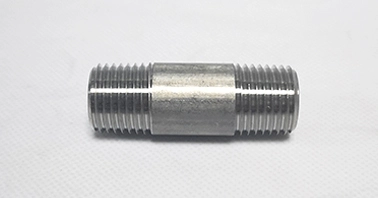
A properly selected pipe coupling changes the equation. TC Pipe Fittings describes its pipe coupling and pipe socket products as fittings designed to connect two pipe sections securely in a straight line, maintain continuous fluid or gas flow, and provide reliable sealing under pressure and temperature conditions—without requiring welding on non-socket-weld types. For threaded, compression, and mechanical coupling configurations, installation can proceed without hot-work permits, fire-watch requirements, or welding inspection, depending on the project standard and authority having jurisdiction.
The commercial value is direct:
Faster installation with smaller crews
Reduced dependence on certified welding labor
Lower hot-work safety management cost
Simpler repair and replacement procedures
Shorter shutdown windows for maintenance on operating systems
It is important to note that socket-weld couplings still require welding—the hot-work reduction benefit applies specifically to threaded, compression, and mechanical coupling types. Selection must be matched to the project's pressure class, medium, and applicable design standard.
How Pipe Coupling and Industrial Pipe Socket Designs Work
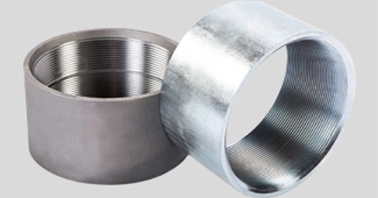
A pipe coupling—also referred to as a pipe socket in certain configurations—is a fitting that bridges two pipe ends to create a continuous, sealed connection. The working principle varies by connection type, and the choice of connection method determines both the installation speed and the hot-work requirement.
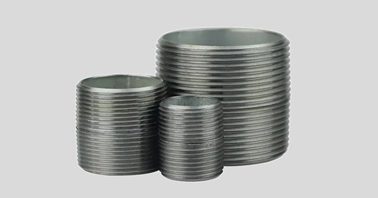
Threaded coupling: the pipe ends are threaded to a standard (NPT, BSP, or project-specific), and the coupling engages both ends through thread contact. A thread sealant or PTFE tape is applied to prevent leakage. No welding required. Suitable for lower-pressure water, gas, and HVAC applications within the rated pressure class.
Compression coupling: a sealing mechanism—typically a gasket or compression ring—creates a pressure-tight seal when the coupling is tightened. Used for repair, retrofit, and transition connections. No welding required.
Socket-weld coupling: the pipe end is inserted into the socket bore and fillet-welded at the socket face. Provides a strong, permanent connection suitable for higher-pressure applications per ASME B16.11. Welding is required—this type does not reduce hot-work exposure.
Full coupling vs. half coupling: a full coupling connects two pipe ends; a half coupling provides a branch or nozzle connection point on a vessel, tank, or larger pipe. Both are available in threaded and socket-weld configurations.
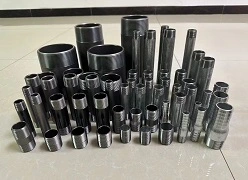
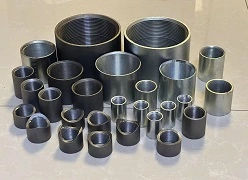
TC Pipe Fittings states that its coupling products support multiple joining configurations—including pipes of the same or different diameters, materials, or end styles—giving buyers flexible installation choices for industrial, plumbing, and construction projects. Precision machining supports tight alignment and stable sealing across the product range.
The key selection principle: match the connection type to the project's hot-work policy, pressure class, and maintenance access requirements—not simply to the lowest unit price.
Key Specifications for Sourcing from a Pipe Socket Factory
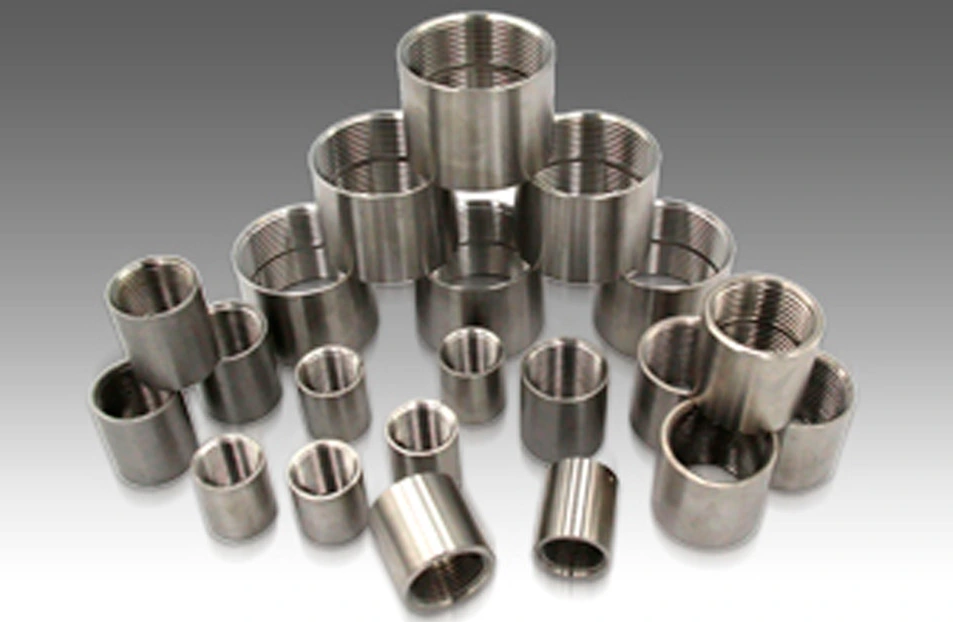
A serious pipe socket factory helps buyers select by working condition—not just nominal pipe size. TC Pipe Fittings offers multiple material categories including galvanized, stainless steel, carbon steel, and black pipe couplings and sockets, with pressure classes ranging from standard utility ratings to ASME B16.11 Class 3000, 6000, and 9000 for forged steel products.
Material Selection
| Material | Best Application |
|---|
| Stainless steel (304/316) | Corrosive media, high-cleanliness environments, coastal or chemical exposure |
| Galvanized steel | Water supply, fire protection, rust-prone environments |
| Carbon steel / black steel | General industrial service, HVAC, compressed air |
| Forged steel | High-pressure process pipelines, Class 3000–9000 per ASME B16.11 |
Complete Specification Checklist
Pipe size: NPS, OD/ID, wall thickness, schedule—confirm compatibility with existing pipe
Connection type: threaded, compression, socket-weld, full coupling, half coupling
Pressure class: working pressure, test pressure, ASME class or PSI rating
Temperature range: confirm max/min operating temperature for steam, hot water, gas, or process fluid
Medium: water, gas, oil, air, chemical, HVAC fluid—affects material and sealing selection
Thread standard: NPT, BSP, or project-specific—prevents assembly mismatch in the field
Surface treatment: galvanized, stainless, black, or custom coating for corrosion protection
Customization: non-standard length, wall thickness, thread type, or material grade for infrastructure projects
Standard malleable iron and galvanized couplings typically support 150–300 PSI for gas and water utility applications. Forged steel socket and coupling products are available in Class 3000, 6000, and 9000 per ASME B16.11 for higher-pressure industrial service. Confirming the correct pressure class before ordering is essential—undersized fittings are a leading cause of field failures and costly rework.
Application Scenarios: Where Fast-Install Pipe Coupling Creates the Most Value
Mechanical pipe joining solutions deliver their strongest ROI in applications where installation speed, maintenance access, and hot-work reduction are all relevant simultaneously.
Water Supply and Plumbing Systems Threaded and galvanized couplings enable fast system expansion and repair with minimal downtime. For building plumbing retrofits and municipal water infrastructure, the ability to make a reliable connection without welding reduces both schedule risk and safety management cost.
HVAC Systems Mechanical rooms, basement plant areas, and building infrastructure retrofits often have limited space and strict hot-work restrictions. Threaded and compression couplings allow HVAC piping connections and repairs to proceed without fire-watch procedures, reducing both installation time and compliance burden.
Gas Pipelines Gas line connections require careful selection of coupling type, pressure class, thread standard, and sealant method. Threaded couplings with appropriate sealants are widely used for lower-pressure gas distribution. Higher-pressure gas applications require confirmation of the applicable design standard and pressure class.
Industrial Process Pipelines Maintenance shutdowns on operating process plants are expensive. Mechanical coupling options that allow faster repair and replacement—without welding qualification, inspection, and cool-down time—can meaningfully reduce shutdown duration and associated production loss.
Fire Protection and Water Transmission Galvanized or corrosion-resistant couplings extend service life in wet, buried, or exposed environments. For fire protection systems, coupling selection must comply with the applicable installation standard (e.g., NFPA 13 in the US market).
High-Pressure Industrial and Petrochemical Applications Forged steel socket-weld couplings per ASME B16.11 Class 3000–9000 are the appropriate selection for high-pressure process service. While these require welding, the precision-machined socket geometry improves fit-up consistency and weld quality compared with field-fabricated connections.
Installation, Selection, Maintenance, and TCO: The Cost Reduction Logic
Selection Workflow
Step 1 — Define the pipe system parameters. Medium, pipe size, wall thickness, schedule, operating pressure, temperature range, and applicable design standard. These inputs determine which coupling types and pressure classes are eligible.
Step 2 — Assess hot-work restrictions. If the project site has strict hot-work permit requirements, limited fire-watch availability, or tight shutdown windows, prioritize non-welded mechanical coupling types for eligible connections. Confirm with the project engineer and authority having jurisdiction.
Step 3 — Select material based on corrosion and cleanliness requirements.
Stainless steel for corrosive media, chemical exposure, or high-cleanliness process applications
Galvanized steel for water supply, fire protection, and rust-prone environments
Carbon steel for general industrial and HVAC service
Forged steel for high-pressure process applications requiring ASME B16.11 compliance
Step 4 — Confirm thread standard and sealing method. NPT and BSP are the most common standards; confirm which applies to the project before ordering. Thread sealant selection (PTFE tape, anaerobic sealant, or pipe dope) should match the medium and pressure class.
Step 5 — Plan for maintenance access. Select coupling designs that allow future repair, replacement, and system expansion without requiring full section removal or re-welding. This is particularly important for operating systems where future maintenance shutdowns carry high cost.
Maintenance and TCO Advantages
Lower installation labor cost from faster mechanical connection—particularly on threaded and compression types—reduces the per-connection installed cost compared with welded alternatives, especially when certified welder rates and scheduling delays are factored in.
Reduced hot-work management burden eliminates permit fees, fire-watch labor, and the administrative overhead of hot-work safety programs on eligible connections. On large projects, this saving compounds across hundreds of connections.
Faster repair and shorter downtime when a coupling can be replaced without welding. For operating systems where every hour of shutdown has a measurable production cost, the ability to make a mechanical repair in minutes rather than hours has direct financial value.
Better lifecycle value when material is correctly matched to the corrosion and pressure conditions. A stainless steel coupling in a corrosive environment will outlast a carbon steel alternative by a wide margin, reducing replacement frequency and the associated labor cost over the system's service life.
TC Pipe Fittings' stainless steel pipe coupling and socket range specifically emphasizes corrosion resistance, durability, high-pressure suitability, and reliability for both plumbing and industrial applications—a product profile that directly supports the lifecycle cost argument for material-matched selection.
Conclusion
The shift toward fast-install pipe coupling and socket-style mechanical joining is being driven by a clear 2026 reality: contractors need faster installation, safer jobsites, fewer skilled-labor bottlenecks, and lower maintenance downtime. Compared with weld-heavy workflows, properly selected pipe coupling and industrial pipe socket solutions can reduce hot-work exposure on eligible connections, simplify repairs, and lower total installed cost across water, gas, HVAC, industrial process, and infrastructure applications.
If you are comparing pipe socket factory options for your project, TC Pipe Fittings can help match the right coupling type, material, pressure class, and connection method to your specific working conditions.
Visit the TC Pipe Fittings Pipe Coupling / Pipe Socket product page to request a recommended configuration and quotation.
Please submit the following details for an accurate recommendation:
Work condition: Medium (water/gas/oil/air/chemical/HVAC), operating pressure, temperature range, indoor or outdoor, corrosive environment (Y/N)
Quantity: Trial order, project quantity, or annual demand
Size/spec: Pipe size, wall thickness or schedule, material preference, connection type, thread standard, pressure class
Target metrics: Installation speed, leakage prevention, corrosion resistance, hot-work reduction target, service life expectation
Current problems: Welding delays, high labor cost, hot-work permit burden, leakage history, corrosion failures, difficult maintenance access, retrofit constraints
FAQ
1. What is a pipe coupling?
A fitting used to connect two pipe sections securely—typically in a straight line—while maintaining flow and preventing leakage. Available in threaded, compression, socket-weld, full coupling, and half coupling configurations depending on the pressure class, medium, and installation requirement.
2. Pipe coupling vs. welding vs. flange: which is better?
Pipe coupling (threaded/mechanical): faster installation, no hot-work required on eligible types, easier repair and replacement—best where speed, safety, and maintainability are priorities.
Welding: strong and permanent, but requires certified labor, hot-work controls, and longer installation time—best for high-pressure permanent connections where mechanical joining is not permitted.
Flange: ideal for equipment connections and systems requiring regular disassembly, but needs more space, bolts, and gaskets.
Best choice depends on pressure class, medium, maintenance requirements, and the project's hot-work policy.
3. What is the ROI of fast-install pipe coupling?
ROI comes from reduced installation labor, shorter shutdown windows, fewer welding procedures and inspections, lower hot-work safety management cost, and faster maintenance response. On large projects, the cumulative saving across hundreds of mechanical connections can be substantial compared with an all-welded approach.
4. Do pipe couplings require pipeline redesign?
Usually not. Most couplings are used for repair, extension, or replacement within existing systems without redesigning the pipeline. Buyers must confirm pipe size, pressure rating, material compatibility, thread or socket type, and whether the applicable design standard permits non-welded mechanical joining for the specific service condition.
5. What parameters are needed for an accurate selection and quotation?
Pipe size and schedule, material, medium, operating pressure and temperature, connection type preference, thread standard, corrosion environment, order quantity, and project-specific requirements such as hot-work reduction, fast installation, high-pressure performance, or compliance with a specific design standard (e.g., ASME B16.11).